
A Christian retreat is more than a vacation with prayer added.
It is an intentional withdrawal from ordinary demands to draw near to God, following the pattern we see when Jesus withdrew to lonely places to pray (Luke 5:16).
If busyness has dulled your faith, these seven signs may suggest that time away is what you need.
1. You’re running on empty even after rest
Normal tiredness usually lifts after sleep or a day off. Soul tiredness does not. You wake up tired after eight hours, or come back from holiday only to feel flat again by Tuesday.
We often call this burnout, but in soul care it can run deeper than workload. Nothing seems to restore you because the part needing rest is not only physical.
Pastors and caregivers know this as compassion fatigue, but it can affect parents and volunteers too. You snap at someone you love, then feel guilty about it.
Scripture gives us Sabbath for this reason. We are made for a rhythm of work and rest, activity and ceasing.
A normal weekend may not provide enough time to reset.
Christian retreats extend that Sabbath rhythm across several days, allowing your body to settle and your mind to become quiet.
If rest no longer restores you, pushing harder is unlikely to help. That soul-level exhaustion is useful information.
It may mean you need to withdraw for a while rather than look for another coping strategy.
Think of soul care as you would think of maintenance.
You do not wait for an engine to seize before changing the oil; you look after it while it still runs.
Retreat time can serve pastors, parents and others who give throughout the week in the same way.
When you step away from phone noise and work demands, your mind can slow enough to notice what you have been avoiding and what God may have been saying quietly.
2. Prayer and scripture feel mechanical
You still pray and open the Bible, but both feel like tasks to check off. The words do not land as they once did.
You may even find yourself dreading prayer rather than wanting it.
Christian tradition has a name for this experience: spiritual dryness. It does not mean you have failed or lost your faith.
It means your inner life has become dry and needs care.
Many of us respond by trying harder, adding another study or waking up earlier, but that burst of effort may only help for a short time.
Retreats take a different approach by slowing you down enough to listen again.
Instead of rushing through several chapters, you might practice Lectio Divina and stay with a short passage for an extended period.
You read it, turn it over in your mind, listen and respond.
That pace can feel strange at first, especially if you are used to measuring progress by how much you complete.
In time, it often feels more honest. If your faith has become duty without communion, setting aside unhurried time can begin to soften it.
Dryness is a signal rather than a verdict.
Older Christian writers did not panic when prayer felt empty and God seemed quiet.
They expected such seasons and learned to remain present while desire returned in its own time.
That perspective can remove unnecessary shame. You are not behind or disqualified. You are dry, and you need refreshment.

3. You’re stuck at a crossroads and can’t decide
You have an important decision to make. It might involve a job, a move, marriage or a sense of calling.
You have weighed the advantages and disadvantages, asked for advice and considered the likely outcomes. Still, you feel foggy.
Discernment needs space that normal life rarely provides. It is difficult to listen clearly when notifications and obligations keep pulling at your attention.
Friends may mean well, but too many opinions can add noise. You need unhurried time to pray and notice what stirs peace, resistance or fear.
The Ignatian tradition has shaped how many Christian retreats approach decisions.
Ignatius of Loyola taught retreatants to pay attention to their inner movements and test them through prayer.
The aim is not to force an answer but to observe patiently. With enough space, a direction may gradually become clearer.
If you keep circling the same choice, it may be time to step back.
A few days of quiet will not make the decision for you, but they can help you listen without the usual pressure.
On retreat, you can place each option before God without rushing to resolve it.
You might write down the different paths and notice what arises as you pray over them.
You may also speak with a spiritual director or trusted companion who can listen without steering you toward a preferred outcome.
4. You feel distant from God and can’t say why
Nothing dramatic has happened, and you have not consciously walked away. Yet God feels far off.
Worship songs no longer move you, sermons sound flat and you cannot point to a clear cause.
This vague sense of distance is common. It may come from grief you did not process or disappointment you never voiced.
Daily life keeps you moving, making it easy to avoid naming what hurts. Silence creates room for what has been buried to rise into awareness.
Many Christian retreats protect long blocks of silence and solitude. You are not expected to perform or produce an impressive spiritual experience.
You are there to listen. Some centers also offer spiritual direction, a quiet conversation with a trained companion who helps you notice where God may have been present.
You speak while they listen and ask thoughtful questions.
You do not need to arrive with the right language or a clear explanation.
You need space where you can be honest without editing yourself for other people.
Naming what is happening matters. When you can admit that you are tired, angry or disappointed with church, you can bring that specific truth into prayer.
Vague guilt tends to keep you stuck, while clear honesty opens the way for a real encounter with God. A day of quiet may surface a sentence that months of hurry kept hidden.
5. You’re carrying hurt you haven’t processed
Loss leaves a mark, and so does betrayal. You tell yourself to move on, but your body still reacts.
You tense when a particular name comes up, or replay old conversations late at night.
A retreat provides a protected setting in which to bring that pain before God. No one expects you to have everything together.
You can weep, pray or write pages that no one else will read. Scripture is full of lament, and retreat space gives you permission to use that language honestly.
Many retreatants arrive with burdens they have never admitted aloud. They may not know where to begin.
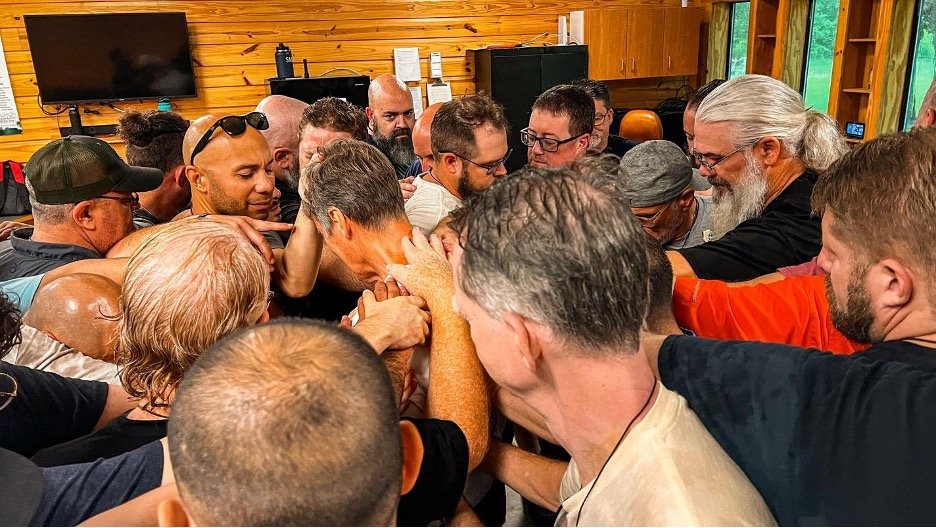
Some ministries therefore help people open up gradually, while a men’s retreat led by an organization like The Crucible Project offers a structured, brotherhood-based environment for facing what has been buried.
A retreat is not therapy, and it should not replace counseling or appropriate pastoral care.
It can, however, become a first honest step. You name the wound before God and allow trusted people to witness your pain without trying to fix you.
You do not need to share everything at once. You can begin by admitting that you are not fine.
Other people may have walked a similar road, and they are less likely to flinch at what you disclose.
That steady presence can loosen pain you have held tightly for years and allow grief to begin moving toward healing.
6. Your faith runs on routine but your heart is absent
You attend church on Sundays and serve when asked. From the outside, you look faithful. Inside, however, you feel hollow and tired.
The motions are still there, but the love behind them feels thin.
Revelation 2:4 speaks directly to this condition. Christ tells the church, you have forsaken the love you had at first.
He does not dismiss their work or patience. He identifies what is missing: they have kept the form while losing the fire.
The Desert Fathers recognized this drift. They left crowded towns for the wilderness because constant noise could smother love and attention.
Their withdrawal helped them return to simple prayer. We may need a similar reset when religious routine begins to take over.
If Sundays feel like habit, you do not need to fake enthusiasm. Admit the coolness to God.
Time away may rekindle an affection that duty alone cannot sustain.
Renewal rarely begins with trying harder on Sundays. It starts by remembering what first drew you to Christ and asking for that warmth again.
A few days away can help you notice grace that has faded into the background. You may return less driven by obligation and more drawn by love.
7. No one really knows how you’re doing
You can spend the whole week around people and still feel unseen.
No one asks how your soul is, and you are not sure you would answer honestly if they did. You have learned to offer short, acceptable responses.
This quiet isolation wears you down. You carry stress and doubt alone, and perhaps pray alone when you pray at all.
The New Testament word for what is missing is koinonia, meaning deep and honest fellowship.
It develops when people tell the truth and choose to remain present with one another.
Men often hide this need for a long time. Many have been taught to stay steady, solve problems alone and avoid appearing weak.
Instead of confiding in others, they withdraw. Men’s ministry retreats create a setting where honesty is expected and no one needs to pretend.
You do not need a crowd. Two or three people who know the real story may be enough. A retreat can help restart that kind of friendship.
A retreat can also offer a low-pressure way back into fellowship.
You meet people who do not know your role at church or work, so you are free from some of the expectations attached to everyday life.
That brief experience of koinonia can interrupt the habit of hiding and make honest local friendship feel possible again.
What to expect and how to choose a retreat
If you have never attended a Christian retreat, the schedule may surprise you. There is usually plenty of quiet.
Mornings often begin with prayer and a short talk, while midday may include silence, walks and journaling.
Evenings can bring shared worship or small-group conversation. The pace is intentionally unhurried.
A helpful rhythm combines guided sessions with open hours, meals and rest.
The guided sessions provide focus, while the open hours allow time for whatever needs attention.
There should also be room to nap, walk slowly or simply stare out of a window.
Choose a retreat based on its length, focus, leadership and church fit. A weekend may give you room to breathe, while a longer retreat offers more time to settle.
Some retreats emphasize silence; others focus on grief, marriage, calling or rest.
Check who leads the retreat and what the organizers believe, and ask a pastor you trust for a recommendation.
Prepare in simple, practical ways. Tell your family that you plan to be offline and settle urgent work beforehand so you are not checking email.
Bring a journal, a Bible, comfortable shoes and suitable layers. Release the expectation of a dramatic moment, since renewal often arrives quietly.
If possible, give yourself a day to reenter normal life. Avoid scheduling major meetings for the evening you return.
Read through your journal and choose one practice to continue, such as ten minutes of morning silence or a weekly walk without earbuds.
Small habits help carry renewal home after the quiet of the retreat fades.
You do not need to earn rest by burning out first. You withdraw because Jesus did and because your soul needs Him.
Pay attention to the signs, then make room to meet with God.